
If you’ve ever seen a lawn care crew driving what looks like a small, slightly aggressive tractor that resembles a lawn mower across someone’s yard and leaving little plugs of dirt everywhere, there’s a good chance you were watching a lawn aerator machine at work.
Those little plugs may look a little strange for a few days, but they’re doing something pretty important for your lawn. Here in the Kansas City area, where many of our lawns grow in heavy clay soil, aeration can be especially helpful. Our soil naturally becomes compacted over time, making it harder for grass roots to get the water, oxygen and nutrients they need.
So, what exactly does a lawn aerator do? And does your yard actually need it? Let’s dig in. (We couldn’t resist.)
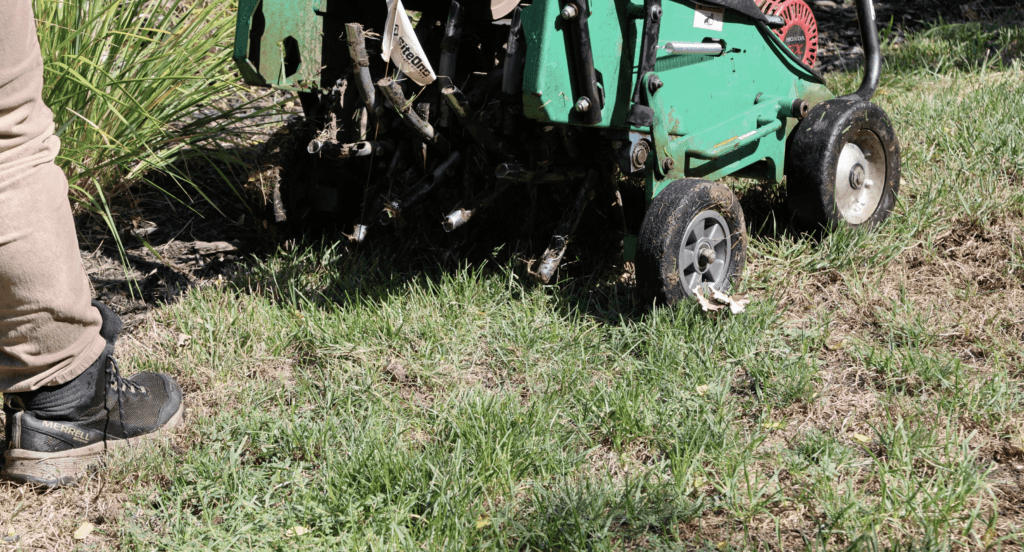
What Is a Lawn Aerator Machine?
A lawn aerator is a machine designed to relieve compacted soil by creating small openings throughout your lawn. There are a few different types of aerators, but for most residential lawns, we’re talking about a core aerator. Rather than simply poking holes into the ground, a core aerator uses hollow metal tines to pull small cylinders—or “cores”—of soil and thatch out of the lawn. Those are the little dirt plugs you’ll see scattered across a freshly aerated yard. And yes, you want to leave them there.
They’ll gradually break down and return organic material to the soil.
How Does a Lawn Aerator Work?
As a core aerator moves across your lawn, its hollow tines penetrate the ground and remove small plugs of soil. Doing this hundreds (and eventually thousands) of times across a lawn creates additional space within compacted soil.
That helps:
- Water reach the root zone instead of running off the surface
- Oxygen move into the soil
- Nutrients reach grass roots
- Roots grow deeper and stronger
- Reduce the effects of soil compaction
- Create better seed-to-soil contact when aeration is paired with overseeding
You aren’t simply putting holes in your lawn. You’re creating better conditions underneath the grass for the lawn to grow.
Why Is Aeration So Important for Kansas City Lawns?
This is where our location matters. A lawn in Kansas City isn’t necessarily dealing with the same conditions as a lawn in Florida, Arizona or the Pacific Northwest.Throughout Kansas City, Overland Park, Leawood, Prairie Village, Shawnee, Lenexa and surrounding communities, we regularly encounter lawns with dense, clay-heavy soil. Clay isn’t inherently bad soil. In fact, it can hold water and nutrients very well. The problem comes when it becomes compacted.
Think about everything that happens on your lawn over the course of a year: kids running through the backyard, dogs following the same route around the fence, lawn mowers making repeated passes, outdoor parties, heavy rainfall and long stretches of hot, dry Kansas City weather. Over time, all of that pressure can squeeze the soil particles closer together. When the ground becomes hard and compacted, grass roots have a much harder time spreading through it. That’s one reason Kansas City lawn aeration can be such an important part of maintaining a healthy lawn.
Core Aeration vs. Spike Aeration: What’s the Difference?
You may have seen inexpensive aerator shoes, spike tools or tow-behind spike aerators advertised for DIY lawn care. They technically make holes in the lawn, but that’s different from core aeration. A spike pushes soil aside to create a hole. A core aerator actually removes a plug of soil from the ground. If the goal is relieving soil compaction, removing those cores generally makes core aeration the more useful approach. It’s also why a professionally aerated lawn can look pretty messy immediately afterward. Don’t panic. Those dirt plugs are supposed to be there.
How Do I Know If My Kansas City Lawn Needs Aeration?
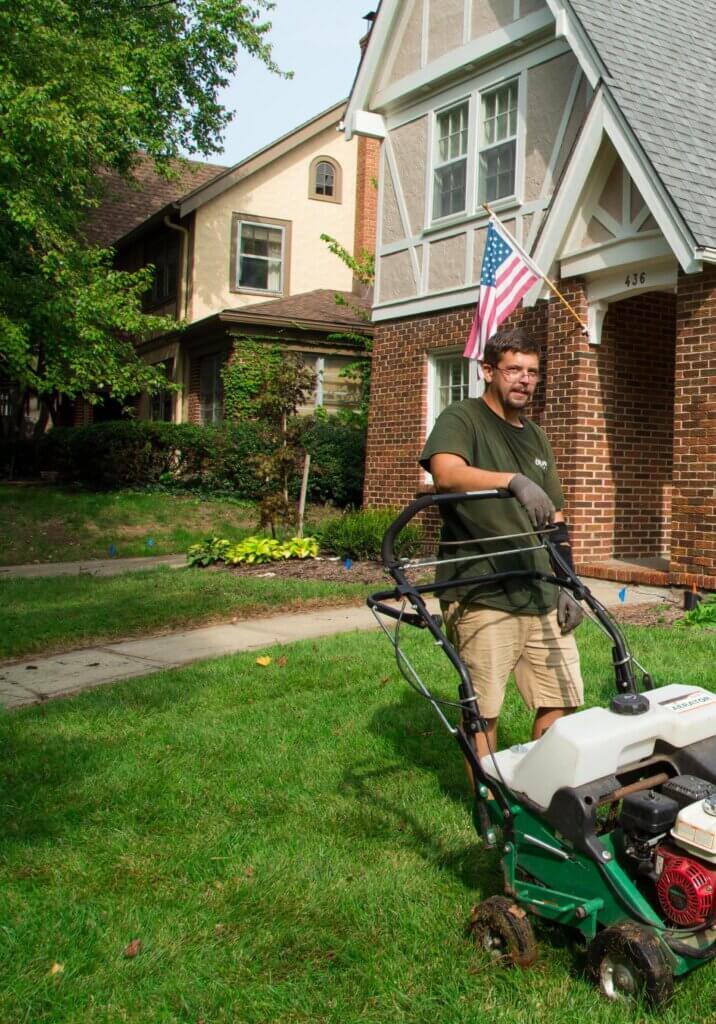
You don’t necessarily need a machine to tell you your soil is compacted. Your lawn may be giving you clues already. If water tends to puddle or run off instead of soaking into the ground, your soil feels extremely hard, your grass is thinning despite regular lawn care, or heavily traveled areas struggle more than the rest of the yard, soil compaction could be part of the problem. Another easy test is to try pushing a screwdriver several inches into moist soil. If it’s surprisingly difficult, the ground may be heavily compacted. That doesn’t automatically mean aeration will solve every lawn problem, but it’s a good reason to take a closer look.
When Is the Best Time to Aerate a Lawn in Kansas City?
This depends on your grass. For the cool-season grasses commonly found in Kansas City lawns, particularly tall fescue, late summer into fall is generally the most useful aeration window because the grass is entering an active growing period. Aeration is also frequently paired with fall overseeding in Kansas City. Opening the soil can improve seed-to-soil contact and give new grass a better opportunity to establish.
Warm-season grasses such as zoysia and Bermuda have a different growing cycle and are generally aerated while they’re actively growing in warmer weather. That’s why we don’t love one-size-fits-all lawn advice. Your grass type matters.
How Often Should You Aerate Your Lawn?
Not every Kansas City yard needs aeration at exactly the same interval. For a lawn growing in particularly heavy clay or dealing with significant traffic and compaction, annual aeration may make sense. A healthy lawn with less compaction may be able to go longer between aerations. Instead of automatically putting aeration on the calendar because you did it last year, look at what your lawn and soil are telling you. At Gunter, we’d rather recommend what your yard actually needs.
Can I Rent a Lawn Aerator and Do It Myself?
Absolutely. Lawn aerator machines are available to rent, and DIY aeration is possible if you’re comfortable operating the equipment. Just know what you’re signing up for.
Core aerators can be heavy, awkward machines, particularly when turning or navigating hills, landscaping, fences and tight backyard spaces. You’ll also need to transport the machine, identify and mark sprinkler heads or other obstacles, and make enough passes to adequately cover the lawn. For a small, relatively flat yard, DIY aeration may be perfectly reasonable. For a larger lawn—or if spending your Saturday wrestling a several-hundred-pound lawn machine isn’t your idea of a good time—this is one of those lawn jobs that can be nice to hand off.
Should You Overseed After Aerating?
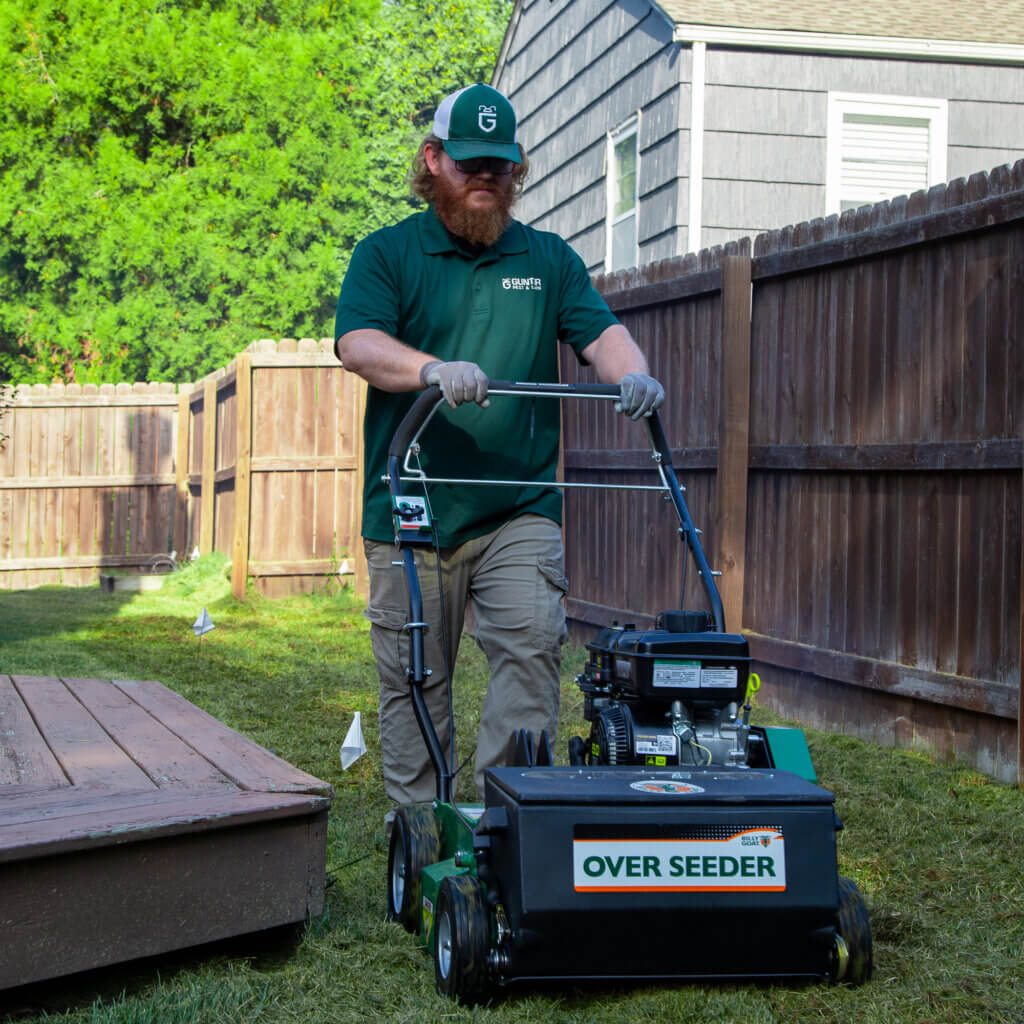
For many Kansas City and Overland Park lawns, particularly tall fescue lawns, aeration and overseeding make a great team. Tall fescue doesn’t spread aggressively to repair thin areas on its own. Overseeding introduces new grass plants, while aeration creates openings that help more of that seed make contact with the soil. That’s why you’ll often see aeration and overseeding services in Kansas City offered together during the fall.
Want to sign up for an aeration and overseeding treatment? Click here or email us here
The goal isn’t just to make the lawn look better for a few weeks. It’s to encourage a thicker, stronger lawn going into the next growing season.
What Happens After Your Lawn Is Aerated?
This is the easy part. Leave the soil plugs alone. You don’t need to rake them up. As you water, mow and use the lawn, they’ll naturally break apart and work their way back into the soil. If you’ve overseeded at the same time, however, your watering routine becomes especially important. New grass seed needs consistent moisture while it germinates and establishes.
And don’t worry if your yard looks a little rough immediately after the service. Aeration is one of those lawn treatments where things can look slightly worse before they look better.
Kansas City Lawn Aeration From a Local Team
We’ve been taking care of Kansas City homes and businesses at Gunter Pest & Lawn since 1950, so we’ve had quite a few years to get familiar with our area’s grass, weather and famously stubborn soil.
Whether you’re searching for lawn aeration in Kansas City, aeration and overseeding in Overland Park, or simply trying to figure out why your lawn isn’t thriving, we’re happy to help you figure out what it actually needs. We provide lawn care and aeration services throughout the Kansas City metro, including Kansas City, Overland Park, Prairie Village, Leawood, Shawnee, Lenexa and surrounding communities. And if your lawn doesn’t need aeration yet? We’ll tell you that, too. Because good lawn care isn’t about doing as many treatments as possible. It’s about doing the right things at the right time so you can spend less time worrying about your grass—and more time actually enjoying your yard.